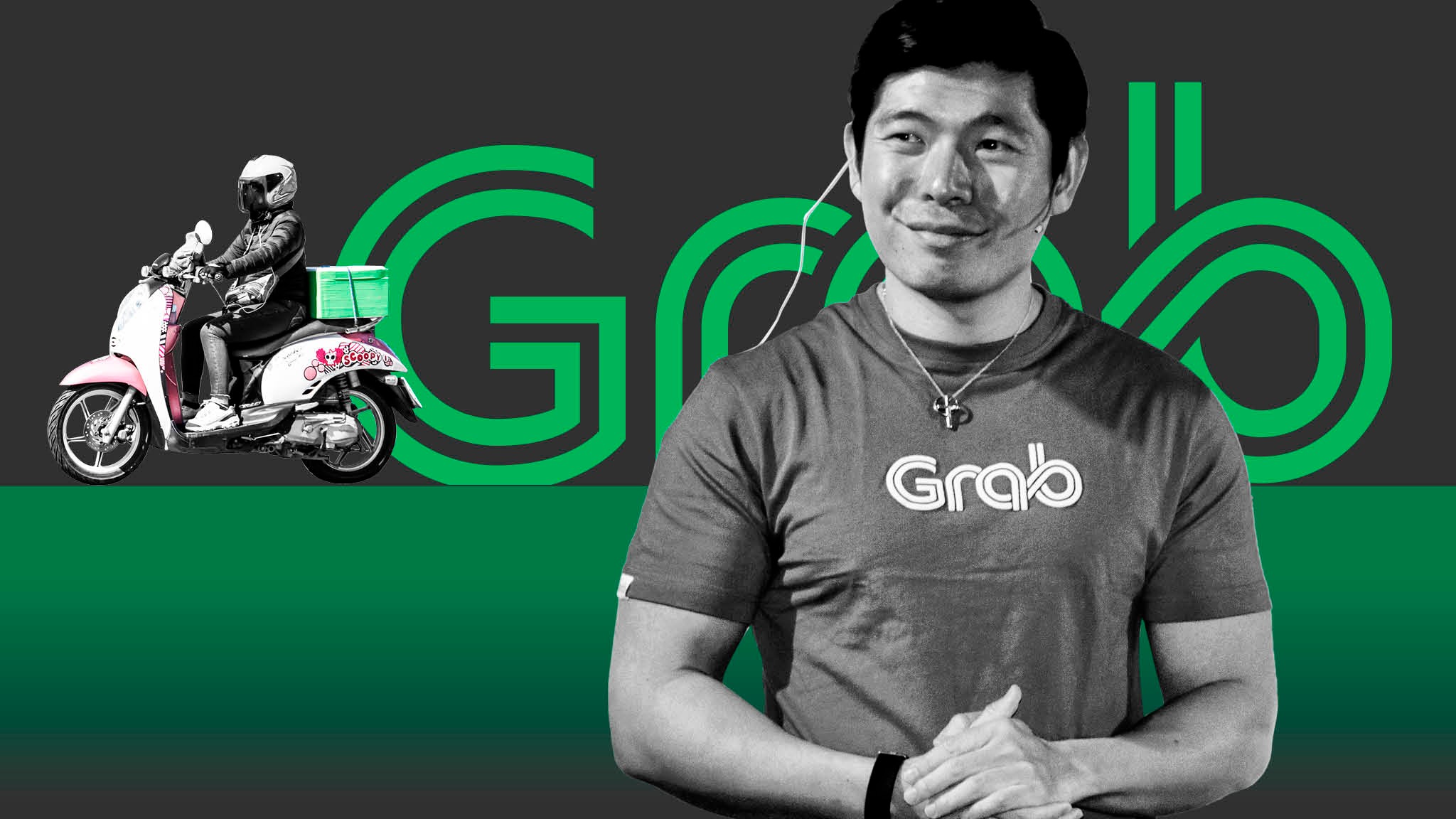

On December 2, 2021, Grab officially IPO'd on NASDAQ with a valuation of 40 billion USD. Ignoring price fluctuations after the IPO, Grab's journey is an inspirational story of a true startup, with a breakthrough business model, going from 0 to 1, then scaling up to 10, to 100,...
We still know Grab as one of the largest super applications in Southeast Asia, however, on Grab's journey from 0 to 1, the picture back then was not really that clear.
This article is translated from the shares of Tan Benedict, Investment Associate of Vertex Ventures, above report e27 about traction and the decision to invest in Grab in 2013, when it was still called MyTeksi.
---
Subscribe Newsletter And agree to receive notifications on ThinkZone's website so you don't miss out on useful articles every week!
---
Looking back at 2013, it's hard to recognize Grab today. At that time, MyTeksi only focused on innovating the ride-hailing segment, with no clear plans for expanding to last-mile delivery, digitizing food delivery services, or even deploying digital banking.
June 2013, we (Vertex Ventures) is one of the first funds to invest in Grab. Today, through this article, I will share a few parts of the Investment Memo on Grab at that time, thinking about this startup's inspiring journey over the past 8 years.

Anthony Tan next to the MyTeksi banner in 2012.
OVERVIEW
At that time, Vertex Ventures invested in Southeast Asia and India 2.15 million USD Go to GrabTaxi for pricing Pre-money To be 9 million USD. With this deal, the new company named GrabTaxi Pte Ltd (Private Limited Company - Private Limited Liability Company) will be established in Singapore, as the parent company of all current and future Grab subsidiaries operating in various markets.
At that time, the current company MyTeksi Sdn Bhd in Malaysia was owned by founder Anthony Tan and some family members. MyTeksi's shares will be converted to GrabTaxi Pte Ltd's shares, in which MyTeksi will become a 100% owned subsidiary of GrabTaxi.


GrabTaxi's mission is to become the number one ride-hailing platform in Southeast Asia by leveraging technology and the trend of using smartphones to eliminate inadequacies in the ride-hailing process for both customers and drivers. This startup wants to bring a convenient and smooth ride-hailing experience to every target market it targets.
GrabTaxi's core product is a mobile application on smartphones, with 2 different versions for drivers and passengers. These two applications allow passengers to book trips, receive prices and track the journey in real time (including the feature of automatically determining the pick-up point).

GrabTaxi's interface at the beginning.
For many passengers, GrabTaxi brings more peace of mind when traveling compared to the traditional taxi experience because:
➤ GrabTaxi carefully checks the driver's profile,
➤ Send the driver's photo and name when a ride is accepted so passengers know in advance,
➤ Pre-determined costs, solving the risk of price gouging,
➤ Share the driver's location in real time, helping passengers clearly understand the route they are taking.
At the same time, GrabTaxi also helps drivers earn more income, take advantage of the car in their free time, with more flexible working hours.

MARKET OPPORTUNITY
In the world, the ride-hailing segment is a field with a very large market scale, but there are still many shortcomings. Passengers also face many inconveniences when calling a car and have major trust problems, while the driver's income is not much.
The model of calling a car online via a smartphone application instead of a switchboard like traditional taxi companies solves these problems, and has also been proven in many markets such as the US, Europe, and China. (with famous names like Hailo, MyTaxi, Uber, Didi Chungxi,...).
Specifically, the ride-hailing market in Southeast Asia is still budding, fragmented, lacking balance between supply/demand, and low income for drivers. GrabTaxi is leading the digital transformation process for this segment in Southeast Asia through:
➤ Take advantage of market understanding and resources to scale up,
➤ Makes the ride-hailing experience more convenient with just one click on the app,
➤ Ensure good quality service for all customers by applying technology to check driver profiles,
➤ Minimize trust risks through clear pricing and roadmaps,
➤ Optimize the number of idle vehicles using technology to connect drivers and predict passengers' travel needs.

The ride-hailing market in Southeast Asia is large (we estimated the market size at that time to be about 700 million USD/year). This scale is expected to continue to grow in the coming years as Southeast Asia achieves stronger economic growth and higher levels of technology usage by users.
Although the ride-hailing model has been proven in markets with more developed economies, we still believe that this model can grow strongly in Southeast Asia.
TEAM
Founder & CEO Anthony Tan graduated from the University of Chicago and worked at Indus Capital, Lazard, Renault before returning to Malaysia to take over the family business - Tan Chong Motor, a Nissan distributor in that region.
Tan then completed his MBA at Harvard Business School, where he met co-founder Tan Hooi Ling. In this course, Tan was also in the same class as Nadiem Makarim, co-founder & former CEO of Gojek (Grab's rivalry in Southeast Asia), and is currently the Minister of Education, Culture, Research & Technology of Indonesia.

Grab's co-founder team.
At that time, Anthony Tan and Tan Hooi Ling together outlined the first concept, business model and plan for an application that connects customers with the nearest taxi drivers in the area.
Both submitted their ideas to the contest Harvard Business School New Venture (NVC) in 2011 and won runner-up. With $25,000 in prize money from the contest and their own capital, Anthony and Hooi Ling brought the MyTeksi application to market in June 2012.
TRACTION
MyTeksi was deployed in June 2012 in Kuala Lumpur, Malaysia. At that time, the team focused entirely on expanding the number of drivers, collaborating with taxi companies and freelance drivers, building a network of about 2,000 drivers by May 2013. The number of trips also increased sharply, reaching 96,386 trips in May 2013.

Number of GrabTaxi riders and drivers from June 2012 to May 2013.
Although the market is still in its infancy, out of 84,000 app downloads, about 24,000 users booked at least 1 ride, resulting in a truly impressive conversion rate of 28.5%.
At the same time, in May 2013, MyTeksi reached 11,600 MAUs. Monthly growth rate (Month on Month growth) Such speed comes from the team's right decisions, including cooperating with telecommunications companies to resell internet data and phones to taxi drivers, increasing app downloads and usage by drivers.

Monthly downloads of the GrabTaxi app from July 2012 to May 2013.
Analyzing the cohort more closely, we also see an increasing number of super users. Percentage of these heavy users with more than 9 bookings/month increased from 1% to 14% in just 1 year, and the average number of bookings per month also increased from 11.7 to 19.0.
This trend is also shown in groups light user (1-2 bookings/month) and medium user (3-8 bookings/month), with the average number of bookings/month increasing from 3.74 to 4.61.
GrabTaxi ended 2012 with revenue of $134,559. However, the majority of this startup's revenue comes from reselling internet data and phones to drivers.
GrabTaxi's future plan is to expand to other cities in Malaysia and enter the market Philippines (Manila) at the end of 2013. In the years that followed, Anthony and team would expand into other markets in Southeast Asia, including Vietnam (Ho Chi Minh City) and Thailand (Bangkok).
Although the first tractions came from ride-hailing services, we do not limit our view of GrabTaxi to just this segment, and instead as a company with the potential to make huge profits from analyzing passenger data and behavior. And most of all, GrabTaxi's potential is not only limited to the borders of one country, but can completely dominate the Southeast Asian market.

RISK
At the present time, Grab is clearly an attractive "piece of cake". However, at that time, the decision to invest in Grab was not easy, because it also came with many risks.
Competitive pressure from major competitors in the world
Big competitors like Hailo or MyTaxi jumping into the Southeast Asian market, although not easy, is still entirely possible. However, unlike the US or Europe, companies will need to have relationships with partners and a very deep level of understanding of the local market to be successful in Southeast Asia.

Although it will take time to develop and dominate the market, GrabTaxi is off to a strong start, with good traction and extensive partnerships with partners in Southeast Asia, helping this startup move as quickly as possible to dominate the Southeast Asian market.\
Risks from future government intervention
This business model is also subject to risks from government interventions as the market gradually becomes crowded. In China, Beijing authorities have also had to intervene to limit problems arising in this area, such as the situation where drivers do not accept rides unless passengers pay extra tips.

GrabTaxi always prioritizes the balance between the interests of passengers and ensuring the driver's income. Founder Anthony Tan also regularly meets and works with government agencies to help them better understand and gradually accept a very new and still controversial business model such as ride-hailing technology.
CONCLUSION OF VERTEX VENTURES
GrabTaxi is a promising young company with a great vision of innovating the ride-hailing industry in Southeast Asia. This market is still in its infancy, fragmented, and heterogeneous. GrabTaxi will need good relationships and a really high level of understanding of the local market to be successful.
We are impressed by the youth and capacity of the founding team, along with the vast network of founder Anthony Tan. That's why we believe GrabTaxi is clearly positioned to take the lead in the region.